
Table of Contents
1. HDCMC Dense Busbar Trunking System for Compact Power Distribution
2. Conductor and enclosure choices
3. How HDCMC integrates with a power system
4. Manufacturing and quality checks
5. Application case: a multi-floor commercial feeder
6. Purchasing checklist
7. Frequently Asked Questions
8. Request an HDCMC Route Review
HDCMC Dense Busbar Trunking System for Compact Power Distribution
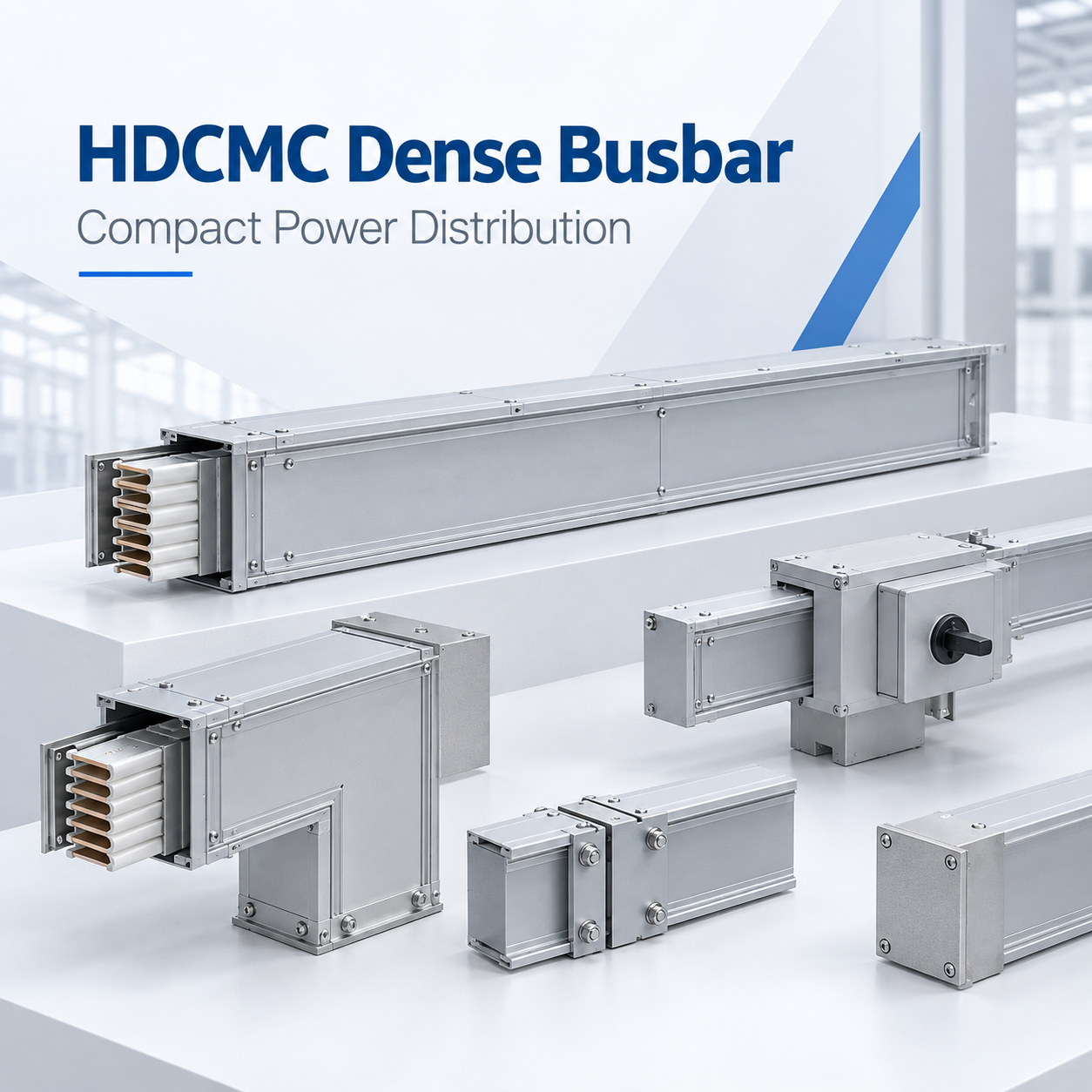
HDCMC Dense Busbar Trunking System is designed for projects that need compact, organized power distribution rather than long runs of separate cables. Zhenjiang Hengdi Intelligent Electric Co., Ltd. describes HDCMC as a dense busbar system using copper or aluminum conductors with an aluminum-alloy enclosure. Its busbar range covers rated currents from 16 to 6,300 A across catalog families, with joints, tap-off units, bends, terminations and installation layouts selected by route, poles and current.
Dense busbar trunking places conductors inside an enclosed route, creating a clear distribution path through industrial, commercial and civil projects. Compared with a large bundle of parallel cables, the system is easier to map on a plan and can support organized feeder connections when the route and tap-off points are defined correctly.
Start with the route and load schedule
Before requesting a quotation, provide route length, direction changes, rated current, voltage, frequency, number of poles, short-circuit requirement, ambient conditions, installation orientation and tap-off positions. The route drawing should show walls, shafts, equipment rooms, expansion joints and access for installation.
Conductor and enclosure choices
The HDCMC family supports copper and aluminum conductor configurations and uses an aluminum-alloy enclosure. Conductor choice affects weight, resistance, joint details and handling. The enclosure affects mechanical protection, heat dissipation, corrosion considerations and installation space. Do not select by conductor name alone; review the complete assembly.
Selection point | Copper configuration | Aluminum configuration | Buyer check |
Conductor | High conductivity option | Lower-weight option | Current and voltage-drop target |
Handling | Usually heavier | Usually lighter | Lifting and support method |
Joint planning | Torque and contact control | Interface and oxidation control | Joint design and inspection |
Route fit | Compact enclosed layout | Compact enclosed layout | Bends, clearances and tap-offs |
How HDCMC integrates with a power system
A busbar route is not only a straight section. It includes joints, flanges, bends, terminations, tap-off units and supports. Each interface should be identified on the bill of materials. Tap-off positions should match the load schedule, while bends and offsets should follow the building or machine layout.
Hengdi’s busbar page groups HDCMC with HDKFW-2A enclosed systems, HDNHMC fire-resistant busbar, HDFMC and HDZMC families. The correct family depends on the project’s current, fire and enclosure requirements. HDCMC is the dense-system choice when its published configuration matches the application.
Manufacturing and quality checks
The website presents Zhenjiang Hengdi Intelligent Electric Co., Ltd. as a manufacturer of cable trays, busbar trunking and switchgear. It states that ISO 9001 quality-system certification and CCC and type-test reports are available for busbar systems. Ask for the current certificate, applicable type-test documents, routine inspection scope and project-specific acceptance values.
Inspection should link conductor identification, enclosure dimensions, joint contact, insulation clearances, tap-off operation, protective earth continuity and final route marking to the approved drawing. A document package should identify the series, current rating, poles and revision.
Application case: a multi-floor commercial feeder
Consider a commercial building where a main feeder runs through several floors and supplies distribution boards. The design team needs a compact route, planned tap-offs and clear access at joints. An HDCMC system can be reviewed by mapping the trunk route to the load schedule, then selecting bends, terminations, tap-off units and supports.
The case is not a universal performance promise. It shows why busbar selection is a route-engineering task. A dense system is useful only when its current, protection, clearances and installation details fit the building.
Purchasing checklist
Confirm:
• rated current, voltage, frequency and poles;
• copper or aluminum conductor;
• enclosure material and protection requirement;
• route length, bends, joints and terminations;
• tap-off locations and feeder loads;
• short-circuit, fire and test-document requirements;
• packing, delivery sequence and installation support.
Compare quotations on the same route and accessory scope. A low price that excludes bends, joints, supports or tap-offs is not a comparable price.
For every busbar project, keep one controlled package containing the route drawing, conductor choice, rated current, pole arrangement, enclosure, joint and tap-off schedule, protection requirement, test documents, installation notes and delivery sequence. This helps design, procurement, installation and maintenance teams work from the same information. A clear package also makes later expansion easier because the installed system can be identified before a new feeder is added. Before release, check the real installation path. Confirm ceiling height, wall penetrations, shaft dimensions, support spacing, fire compartments, expansion joints, access panels and the lifting route for each section. A straight length may fit the electrical drawing and still be impossible to move through a plant room door. Bends and tap-offs should be positioned where the load schedule requires them, not where they are easiest to draw. For copper and aluminum options, review current, voltage drop, temperature rise, weight, joint design and maintenance practice together. The enclosure and protective-earth arrangement should be consistent through straight sections, joints and terminations. At the factory, agree which dimensions are checked before dispatch and which tests are included in the dossier. At site, identify every section and compare it with the route drawing before installation. Record torque values, joint checks, insulation or clearance checks and protective-earth continuity according to the project plan. These records help commissioning and make future troubleshooting faster. When an expansion is planned, retain the original series, current rating, pole arrangement and accessory schedule. That information prevents an incompatible tap-off or bend from being ordered later. Good busbar sourcing is therefore a combination of electrical design, mechanical coordination, documentation and practical installation planning. The HDCMC name is a useful product reference, but the route and load data remain the basis for a dependable system.
When comparing quotations, make the scope visible. List straight sections, joints, tap-off units, bends, terminations, supports, end caps, shipping marks and documents as separate lines. Confirm whether installation hardware, lifting accessories and commissioning support are included. Ask how a change in route or current will affect the bill of materials and lead time. For a remote project, request photographs of packing and section labels so the installer can match each package to the drawing. If a component is damaged in transit, clear marks and inspection records make the claim and replacement process easier. These details may seem ordinary, but they prevent the most common busbar project delays: missing accessories, wrong orientation, unclear section numbers and unplanned site modification. A complete quotation is easier to approve and easier to install.
This reference also supports maintenance planning and future system extensions. It keeps the original route information available for commissioning and audits.
Frequently Asked Questions
This makes future troubleshooting and expansion faster for plant teams.
What is an HDCMC Dense Busbar Trunking System?
It is a compact busbar trunking family with copper or aluminum conductors and an aluminum-alloy enclosure. The exact current, poles, protection and accessories are selected for the route.
What rated current is available?
The website states that its busbar catalog families cover 16–6,300 A. Confirm the selected HDCMC configuration and project conditions before design release.
Can copper and aluminum conductors be selected?
Yes. The HDCMC page lists copper and aluminum configurations. Selection should consider current, voltage drop, temperature rise, weight, joint design and project requirements.
Which accessories are needed?
Joints, tap-off units, bends, terminations and installation layouts are selected according to series, current, poles and route. Include the route drawing in the inquiry.
Request an HDCMC Route Review
Send Zhenjiang Hengdi Intelligent Electric Co., Ltd. your route drawing, load schedule, current, poles, conductor preference and tap-off plan. The team can review HDCMC dense busbar and the required joints, bends, terminations and accessories.